
Scan
Add in Wechat
What details should be paid attention to when polishing with a head polishing machine
Publish time:2026-03-25 11:15:24 Popularity:0 Source:未知来源
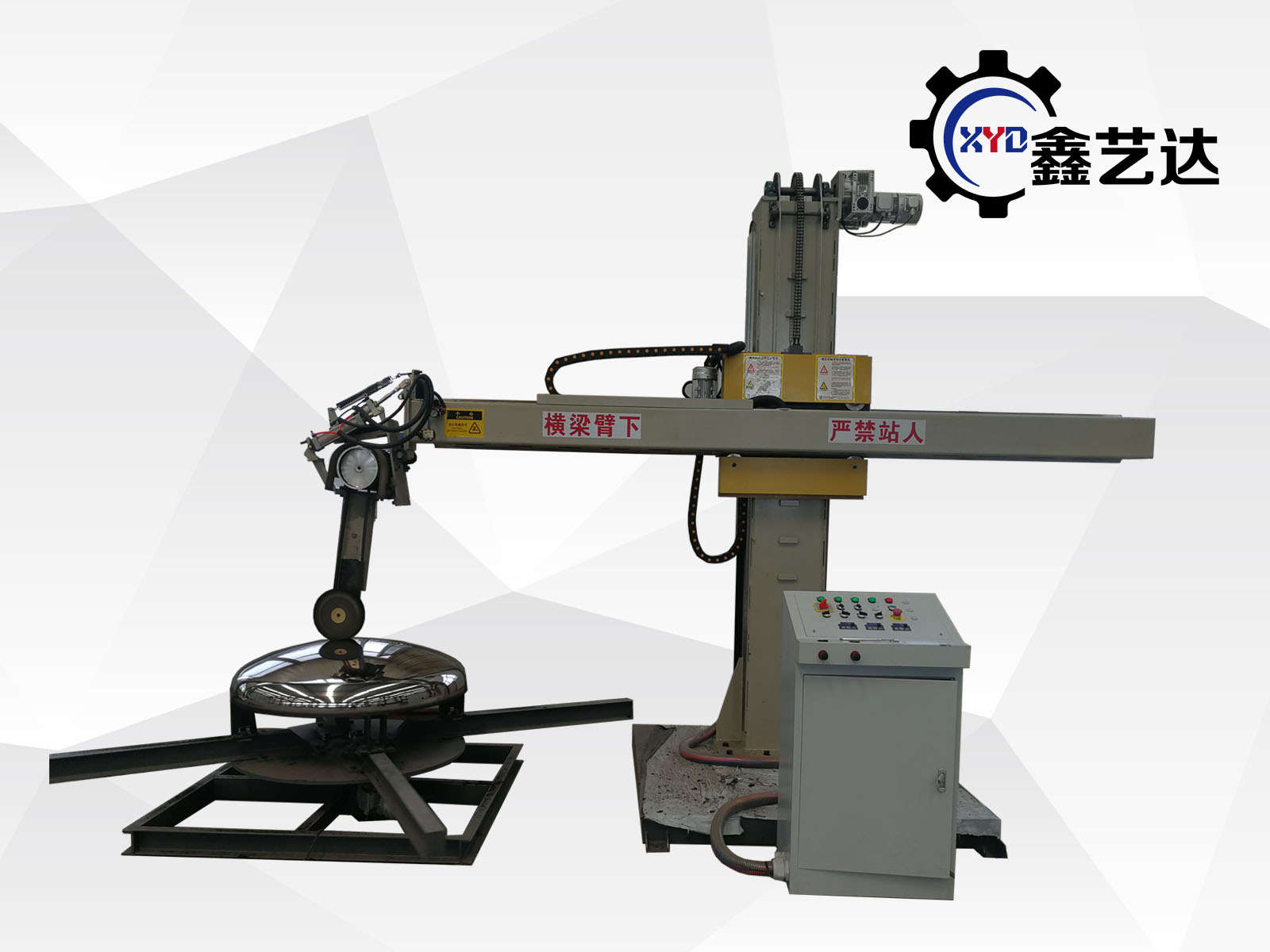
As a core component of pressure vessels, storage tanks, and other equipment, the surface polishing quality of the head directly affects the sealing performance, corrosion resistance, and service life of the equipment. When using a head polishing machine for processing, only by strictly controlling every operational detail can the polishing effect be ensured to be stable, efficient, and safe. The following are the core precautions for operating a head polishing machine, summarized by Xinyida based on years of equipment research and development and customer service experience:
- Before startup: conduct a comprehensive inspection to lay a solid foundation for safety
- Equipment status check
※ Confirm that all components such as the main unit, grinding head, turntable, and control cabinet are securely connected, without any looseness, deformation, or wear.
※ Check the installation accuracy of consumables such as abrasive belts, Chiba wheels, and cloth wheels to ensure that the grinding head is parallel to the workpiece surface, without any deflection or jamming.
※ Verify whether the parameters of the CNC system (such as feed rate, polishing pressure, and trajectory path) match the current workpiece specifications to avoid processing defects caused by incorrect parameters.
※ Check whether the lubrication system and dust collection system are operating normally, ensuring that each lubrication point is adequately supplied with oil and that the dust removal pipeline is unblocked.
- Preparation of workpiece and environment
※ The head to be polished needs to be fixed at the center of the turntable, ensuring secure clamping to avoid deviation or detachment during high-speed rotation.
※ Remove impurities such as oil stains, burrs, and welding slag from the surface of the workpiece to prevent them from scratching the polished surface or accelerating the wear of consumables.
※ Keep the operating environment clean and tidy, avoid dust and debris from entering the transmission parts of the equipment, and ensure that the operating area is well-ventilated and complies with safety regulations.
- During polishing: precise control to ensure processing quality
- Parameter and trajectory optimization ※ According to the head material (such as stainless steel, carbon steel, aluminum alloy) and polishing requirements (coarse polishing, fine polishing, mirror polishing), the grinding head moving speed, polishing pressure, and trajectory path should be reasonably set.
※ When programming with a numerical control system, it is necessary to smoothly plan the path along the contour of the head, avoiding sudden stops and accelerations to prevent the appearance of chatter marks or uneven polishing.
※ During the rough polishing stage, the feed rate can be appropriately increased to quickly remove the excess material on the surface; during the fine polishing stage, the speed and pressure need to be reduced to gradually improve the surface finish.
- Consumables and pressure management ※ Regularly check the wear of abrasive belts/grinding wheels, and promptly replace aging consumables to avoid imbalance in polishing pressure due to wear of grinding wheels.
※ Utilize the system's automatic compensation function to adjust the polishing pressure in real-time after the grinding wheel wears, ensuring uniform stress on the workpiece surface and consistent polishing results.
※ When replacing consumables, it is necessary to strictly follow the operating specifications to ensure that the abrasive belt/grinding wheel is installed in place, avoiding vibration or scratches caused by installation deviations.
- Equipment operation monitoring ※ Pay close attention to the operating status of the grinding head and turntable. If there is abnormal vibration, noise, or excessive temperature, the machine must be stopped immediately for inspection.
※ Monitor the working efficiency of the dust collection system, promptly clean up the collected dust, and prevent dust accumulation from affecting equipment precision or posing safety hazards.
※ It is strictly prohibited to open the protective cover or touch the moving parts while the equipment is operating, to avoid safety accidents.
- After polishing: Final maintenance to extend equipment lifespan. 1. Clean the workpiece and equipment. ※ After polishing is completed, first shut down the equipment until it is completely stationary, then remove the sealing head to avoid scratching the polished surface due to collision.
※ Use specialized cleaning tools to remove polishing dust and residual abrasives from the surface of the workpiece, and check whether the polishing quality meets the requirements.
※ Thoroughly clean the interior and exterior of the equipment, with a focus on removing dust and impurities from areas such as the grinding head, turntable, and guide rails, to keep the equipment clean and tidy.
- Equipment maintenance and storage: As per the requirements outlined in the equipment maintenance manual, replenish lubricating oil/grease at each lubrication point, inspect the wear condition of transmission components, and promptly replace vulnerable parts.
※ Shut down the numerical control system, power supply, and air source, restore the equipment to its initial state, and keep operation records (such as processing time, consumable replacement, malfunctions, and abnormalities).
※ During long-term downtime, it is necessary to perform rust prevention treatment on the equipment, cover it with a dustproof cover, and avoid environmental factors that may cause component aging or accuracy degradation.
- Safety and Compliance: Always Prioritize ※ Operators must undergo professional training, be familiar with equipment structure, operational procedures, and safety regulations, and work with valid certification.
※ During work, it is necessary to wear protective glasses, dust masks, anti-slip gloves, and other labor protection supplies to avoid injury from dust and debris.
※ Strictly adhere to safety regulations for electricity and gas usage, conduct regular safety inspections on equipment, and promptly identify and eliminate potential safety hazards.
※ Establish equipment maintenance records, regularly calibrate the numerical control system, and test equipment accuracy to ensure long-term stable operation of the equipment.
Previous article:What are the types of polishing Next article:Crafted with ingenuity, radiating a new brilliance - Xinyida round tube polishing machine sets a new benchmark for precision processing of tubular materials
Return to List About News
- 2026-06-12 A matte brushed finish features a uniform linear texture with a soft reflection of light, giving the surface a clean and industrial appearance.
- 2026-05-27 Crafted with ingenuity, radiating a new brilliance - Xinyida round tube polishing machine sets a new benchmark for precision processing of tubular materials
- 2026-03-25 What details should be paid attention to when polishing with a head polishing machine
- 2025-12-23 What are the types of polishing
- 2025-12-23 What is the working principle of a flat plate polishing machine
- 2025-11-15 Precautions to Take Before and After Operating a Polishing Machine
- 2025-11-05 Have you maintained the polishing machine?
- 2025-10-14 The difference between single-station pipe polishing machines and multi-station pipe polishing machines
Online Message
- PRODUCTS
- CONTACT US


Online Service
 QQ Customer Service
 Contact information
QR code

Online Service